
Strategic Framework for High-Converting Email Campaigns
Creating an effective email marketing campaign is essential for businesses looking to engage customers and drive conversions. Email remains one of the most potent tools for direct communication, providing opportunities to reach targeted audiences with tailored messages. In this comprehensive guide, you will learn how to build an email marketing campaign that not only captures attention but also enhances customer engagement and boosts conversion rates. By exploring strategies, best practices, and measurement techniques, this article provides valuable insights that cater to both beginners and seasoned marketers. We will delve into impactful email content creation, targeting and segmentation strategies, and the vital role of automation in streamlining your campaigns, ensuring every message speaks directly to your audience’s needs.
Creating Impactful Email Content
Crafting compelling email content is the cornerstone of any successful email marketing campaign. It’s essential to create messages that resonate with recipients, driving engagement and fostering a pathway toward conversion. Effective email content typically features personalization, which helps establish a stronger connection with the reader. Engaging subject lines, informative body text, and clear calls to action (CTAs) can significantly improve open and click-through rates, ensuring your emails achieve their intended goals.
For instance, when developing emails, consider employing A/B testing to identify which subject lines or content formats generate the highest engagement. This data-driven approach allows you to refine your strategies continuously. A well-crafted email that speaks directly to your audience’s interests can improve conversion rates by effectively guiding potential customers along the buyer’s journey.
Lark Media NYC specializes in crafting cohesive email marketing campaigns designed to enhance online engagement, making your brand’s messaging clear and impactful and ensuring that your audience receives tailored content that resonates.
Optimizing Targeting and Segmentation

Optimizing your email marketing targeting and segmentation is crucial for maximizing engagement and conversion rates. By dividing your email lists based on demographic factors or behaviors, you can create tailored messages that cater to specific audience segments. This customization enables your communication to be more relevant and effective.
The following segmentation strategies can be highly effective:
- Demographic Segmentation: Categorize your audience by age, gender, location, or income level to tailor content and offers.
- Behavioral Segmentation: Identify and segment users based on their engagement history with your emails or website, allowing you to target based on user actions.
- Psychographic Segmentation: Understand the values, interests, and lifestyles of your audience to create personalized campaigns that resonate deeply.
Audience Segmentation
Different methods can be employed to segment your audience effectively for targeted campaigns. Utilize data analytics tools to define various segmentation types, which might include geographic, demographic, or behavioral segments. Psychological aspects—such as interests and values—can further refine your email lists and optimize engagement.
Additionally, employing user-friendly tools like email marketing software can streamline the audience analysis process, enabling easy implementation of your segmentation strategies. As you analyze engagement levels, you can better tailor your strategies for maximum effectiveness.
Lark Media NYC’s expertise in audience segmentation and personalization ensures that your email campaigns are not only targeted but also relevant to your audience, helping you achieve higher engagement rates.
Measuring Campaign Success
Evaluating the effectiveness of your email marketing campaigns is vital for understanding what works and what needs adjustment. By identifying key performance metrics, you can gain meaningful insights into your campaign performance, enabling data-driven decisions for future improvements.
Essential performance metrics to monitor include:
- Open Rate: Measures the proportion of recipients who open your email, helping you assess subject line effectiveness.
- Click-Through Rate (CTR): Indicates how many recipients clicked on embedded links, showcasing content engagement.
- Conversion Rate: Represents the percentage of recipients who completed a desired action after clicking on links in your email.
Understanding the impact of engagement metrics like PagesPerVisit, TimeOnSite, and EmailClicks can further refine conversion prediction models in digital marketing.
Engagement Metrics and Customer Conversion Prediction
This research explores the impact of engagement metrics on predicting customer conversion rates within digital marketing, employing three advanced predictive modeling techniques: Logistic Regression, Decision Trees, and Random Forests. Using a comprehensive dataset of 8,000 customer interactions, the study evaluates critical engagement metrics such as PagesPerVisit, TimeOnSite, and EmailClicks to determine their influence on conversion outcomes.Predicting customer conversion in digital marketing: Analyzing the impact of engagement metrics using logistic regression, decision trees, and random forests, 2025
| Performance Metric | Description | Importance |
|---|---|---|
| Open Rate | Percentage of recipients who open the email | Indicates subject line effectiveness |
| Click-Through Rate | Percentage of email clicks to total opens | Measures content engagement |
| Conversion Rate | Rate of desired actions following email clicks | Shows campaign success in driving actions |
By applying A/B testing strategies, you can continue to refine your approach based on these metrics, allowing for continuous growth and improvement in your campaigns.
How to Develop a Targeted Email Marketing Strategy for Maximum Engagement
Developing a targeted email marketing strategy involves several critical components. Creating detailed buyer personas helps tailor your messaging, ensuring that emails resonate with your intended audience. Additionally, integrating dynamic content enhances personalization, making each email feel unique and relevant.
Factors influencing campaign timing can also significantly impact engagement. For instance, understanding when your audience is most likely to check their emails can help you choose optimal send times, which may vary depending on demographics or industries.
This comprehensive approach ensures that each communication aligns with recipients’ preferences and behaviors, resulting in enhanced overall engagement.
How Can Email Marketing Automation Enhance Campaign Efficiency and Conversion?
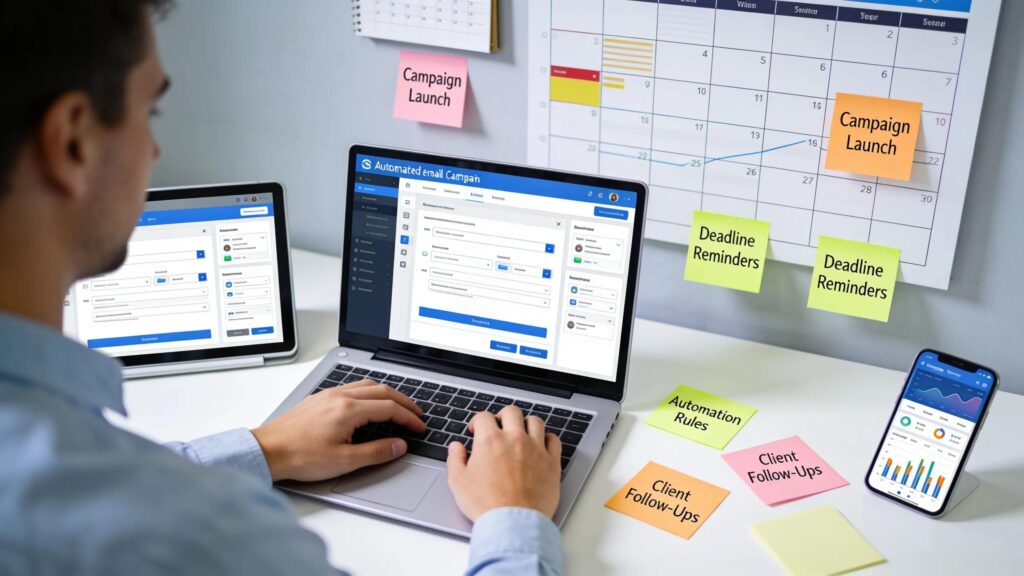
Email marketing automation streamlines your campaign management processes, allowing for timely and relevant communication without relying on manual effort. Automation enables the timely delivery of customer-centric messaging based on triggers such as user actions or lifecycle stages.
Benefits of email marketing automation include:
- Increased Efficiency: Automate repetitive tasks and campaign scheduling to free up valuable resources.
- Personalization at Scale: Use automation to tailor messages based on user data, enhancing relevance.
- Improved Engagement: Timely, relevant messaging keeps your audience engaged and informed.
By integrating automation techniques, you can ensure your email campaigns achieve greater consistency and effectiveness in driving conversions.
Email automation is a powerful strategy that allows marketers to deliver highly targeted and personalized messages to the right people at the right time.
Email Automation for Targeted and Personalized Messages
Email automation is a powerful strategy that enables marketers to deliver highly targeted and personalized messages to the right people at the right time. Byutilizing marketing collateral personalization, marketers can create triggered or timed promotional emails tailored to their customers’ and prospects’ specific needs and preferences. This approach ensures that each email is relevant and impactful, increasing the chances of engagement and conversion. With the ability to automate email delivery based on specific conditions or customer behaviors, businesses can optimize their email marketing efforts and achieve better results.How to Use Email Automation to Grow Your Business?, 2022
Content Formats Drive Engagement in Email Campaigns
The content format you choose plays a significant role in your email’s effectiveness. Different formats can engage users in various ways, making it essential to select the right type for your campaign objectives. Some popular content formats that drive engagement include:
- Email Newsletters: These provide consistent updates and information, making them ideal for keeping your audience informed.
- Promotional Offers: Discounts or exclusive deals entice customers to act quickly, enhancing conversion rates.
- Drip Campaigns: A series of emails designed to nurture leads and guide them through the purchase process.
Each format serves a purpose in your broader email strategy, effectively driving engagement and optimizing conversion rates.
Understanding how to implement varied content formats allows your campaigns to remain fresh and dynamic, which can lead to improved audience engagement.